The Light That Stayed in Goma
The city of Goma, in eastern Democratic Republic of the Congo, has experienced armed conflict and humanitarian crises for decades. Solar energy is uniting neighbors and bringing safety.
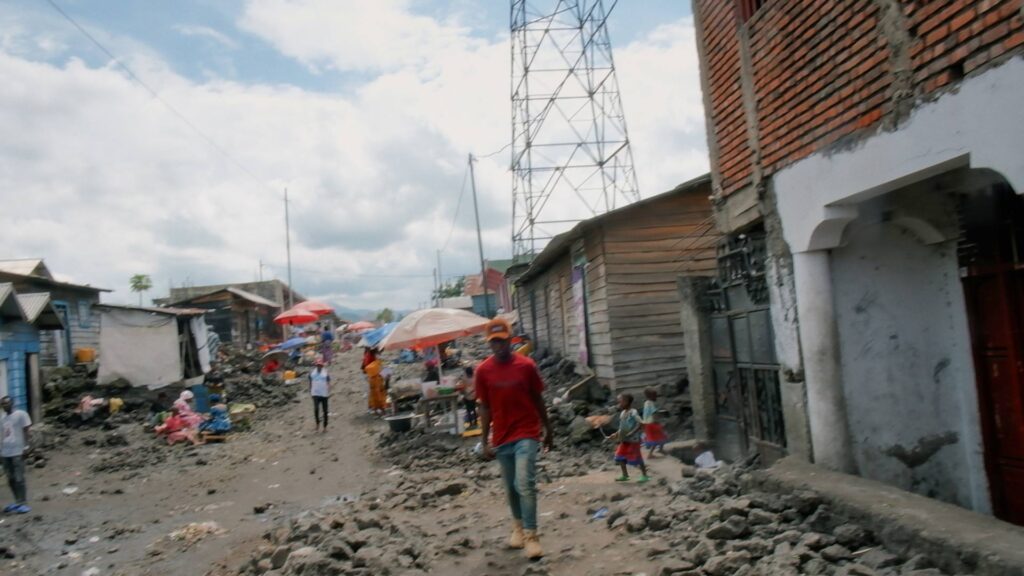
For more than three decades, the eastern Democratic Republic of the Congo (DRC) has been plagued with conflicts that have killed and displaced millions of people, hindered development, undermined state authority, and trapped its people in poverty. In Goma, the capital of North Kivu province, violence and insecurity remain entangled with the local economy.
War and unrest stifle economic growth, limited job opportunities leave young people vulnerable to recruitment by militias and criminal networks, and armed groups profit from illicit supply chains, including the charcoal trade on which many inhabitants rely. The situation has also left communities with poor or non-existent infrastructure and limited access to reliable electricity, with many households and businesses relying on expensive diesel generators or going without power.
Empowering a Community
Nuru—meaning “light” in Swahili—is a Congolese company developing decentralized solar minigrids that provide reliable renewable electricity to communities in eastern Congo. In Ndosho, a densely populated Goma neighborhood with a large population of displaced people, less than three percent of residents had access to electricity when Nuru developed its 1.3-megawatt solar-hybrid minigrid in 2020. The system now supplies electricity to more than 2,500 households and businesses.
The minigrid is helping to power an urban economy. Its customers include welders, carpenters, grain millers, healthcare workers, telecommunications providers and water-pumping stations. For businesses that previously depended on diesel generators, reliable solar power is lowering costs, reducing disruptions, and enabling longer hours of operation. It is helping to sustain livelihoods and create the conditions for new businesses to emerge. Revenue generated by the minigrid has also helped finance public streetlights that illuminate roads and commercial areas at night, improving safety after dark and allowing night markets to thrive.
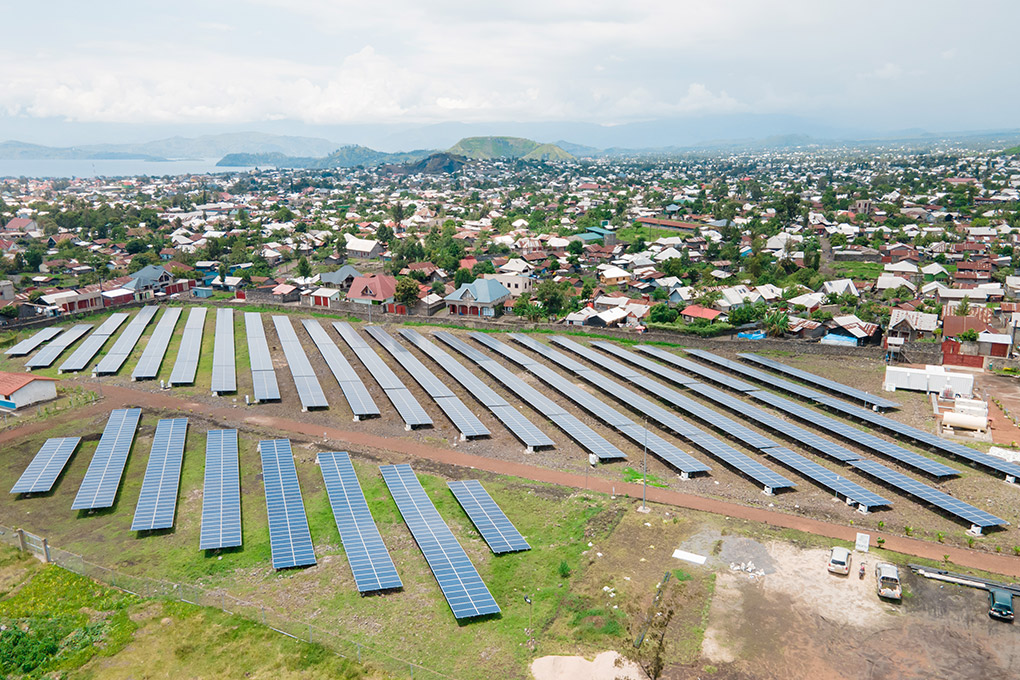
Nuru's minigrid in the Ndosho district of Goma is critical to the livelihoods of its neighbors. The grid is part of a solar network that is among the largest in sub-Saharan Africa.
Protecting the Grid
In early 2025, when the M23 rebel group captured Goma and fighting engulfed the city, Nuru’s solar minigrid continued to operate, helping to maintain connectivity and water supply when other electricity infrastructure failed or was damaged. During this period, residents risked their lives to defend the gates to the minigrid site, a striking indication of the value the community had come to place on this local renewable energy infrastructure.
Nuru’s experience illustrates the broader value of renewable energy in communities such as Ndosho. By generating and distributing electricity locally, the minigrid has helped sustain economic activity and essential services even during periods of intense instability. In a community repeatedly disrupted by conflict, such infrastructure can become an important source of local resilience, helping to create the conditions for a more predictable and stable future.
Featured Partners
Nuru
Nuru is a Congolese company developing decentralized solar minigrids that provide reliable renewable electricity to communities in eastern Congo.

Energy Peace Partners
Energy Peace Partners (EPP) provides some of the financing for Nuru’s work through Peace Renewable Energy Credits (P-RECs).

Stanley Center
Renewable Peace is an initiative of the Stanley Center that tells the stories of transformative renewable energy and peace projects, such as the work of Nuru in DRC.