Shared Power, Shared Peace in Northern Nigeria
Communities in the most conflict-affected regions of Nigeria come together to maintain a renewable minigrid and replace diesel dependency.
Northern Nigeria has experienced decades of insecurity and recurring conflict, including the Boko Haram insurgency in the northeast and banditry, kidnapping, and intercommunal violence across other parts of the region. These conflicts have displaced millions of people, disrupted livelihoods and economic activity, and compounded already high levels of poverty. Climate change is placing additional pressure on natural resources and rural livelihoods, while limited access to basic services, including electricity, has increased the vulnerability of local communities and contributed to political grievances.
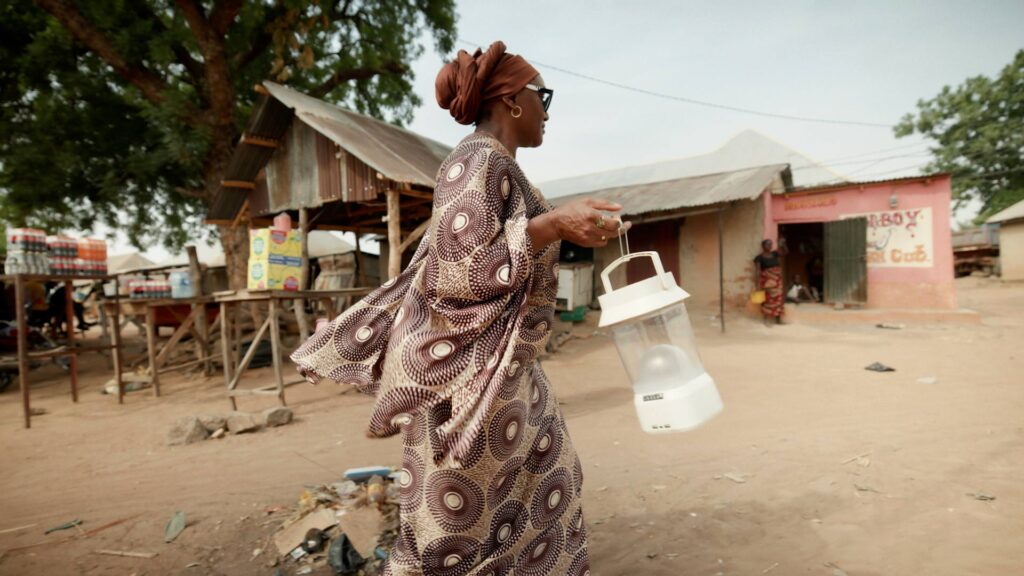
It is in this context that Sosai Renewable Energies is building a network of decentralized solar minigrids in communities where state institutions have historically been weak, investment limited, and electricity infrastructure neglected or non-existent. Founded by northern Nigerian entrepreneur Habiba Ali—known endearingly as “Mama Solar”—the renewable energy provided by Sosai is transforming communities.
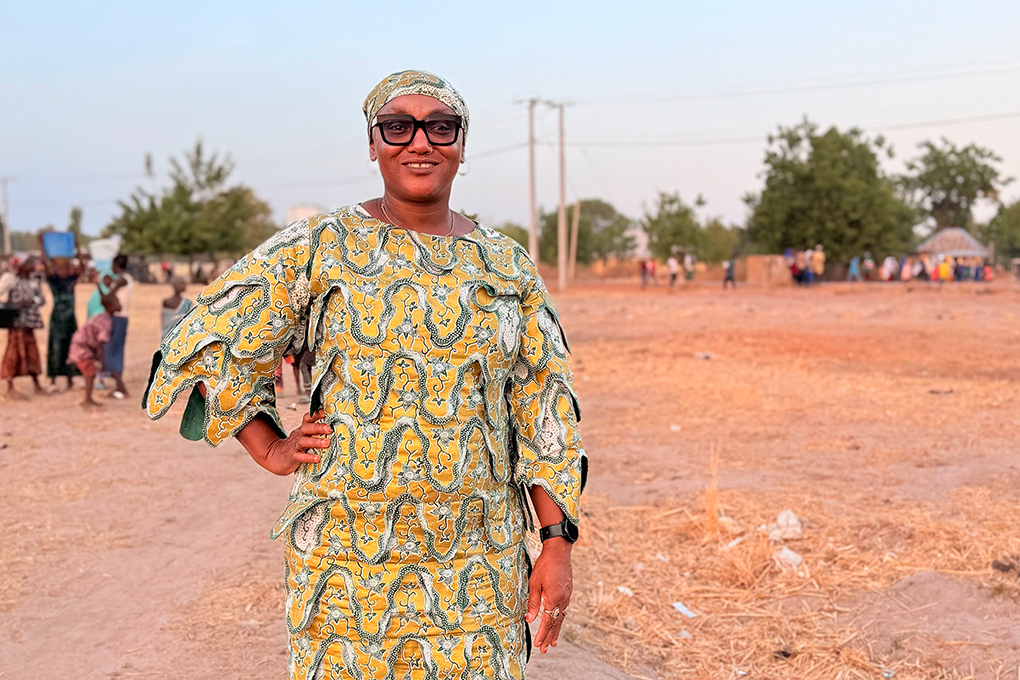
Habiba Ali, founder of Sosai Renewable Energies.
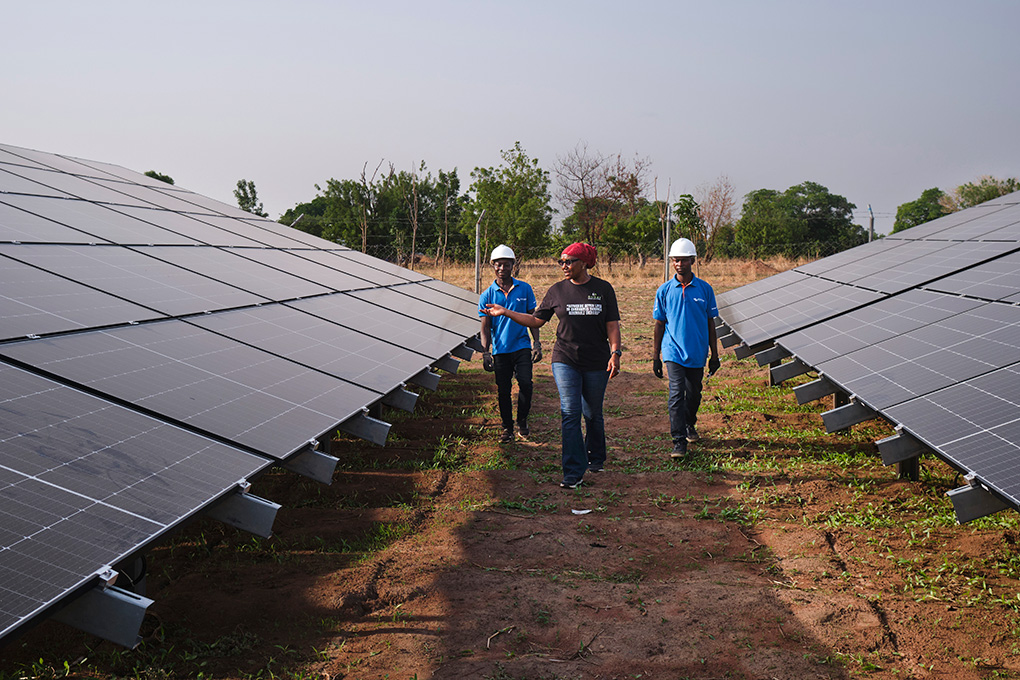
Habiba and staff inspect a solar minigrid in Biem, Benue State, Nigeria. Photo by Ashden
Minigrid, Major Impact
In the town of Kalong, Sosai’s solar minigrid is providing electricity to hundreds of households, attracting new businesses, while new services such as a medical diagnostic center have emerged. At the local school, enrollment has increased as reliable electricity has enabled the school to acquire computers, and solar-powered boreholes have provided water and improved sanitation.
In these communities, renewable energy is supporting productive activities, creating jobs, and expanding economic opportunities, particularly for young people who, in the absence of viable livelihoods, are vulnerable to recruitment by armed groups and criminal gangs. As a female entrepreneur, Habiba also sees access to electricity as a pathway toward greater economic independence for women. This, in turn, strengthens their ability to keep their children in school and steer them toward opportunities that reduce their vulnerability to recruitment and crime.
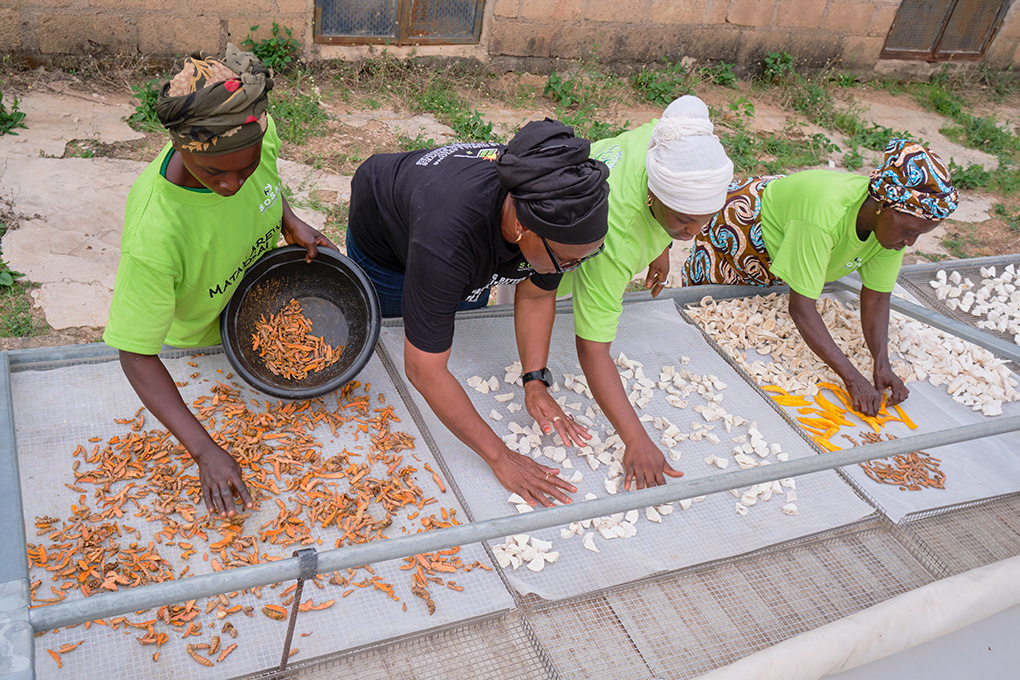
Sosai provides solar-powered dryers, mills, and refrigerators to a group that works to empower local women. Photo by Ashden
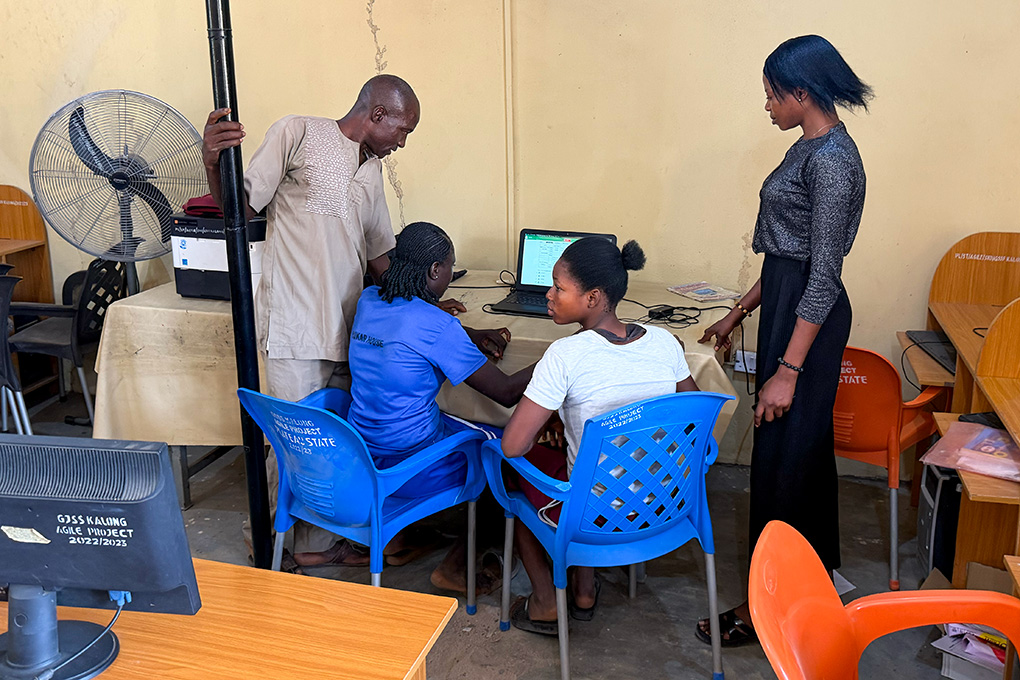
A Sosai-supported computer lab in Kalong, Plateau State.
Reuniting Communities
Access to renewable energy has also provided a basis for cooperation between previously divided communities. In the town of Mararaba Demshin in Plateau State, Sosai’s solar minigrid has introduced a shared resource for the Shamfu and Mouda communities, helping bring the two groups together to resolve a longstanding land dispute and begin a new era of cooperation.
While the drivers of insecurity in northern Nigeria are complex, Sosai’s experience demonstrates that renewable energy can help address some of the underlying conditions that contribute to fragility. By strengthening livelihoods, supporting productive agriculture, improving public services, and fostering cooperation among communities, renewable energy is helping to build resilience in local communities and providing part of the foundation for greater prosperity and peace.
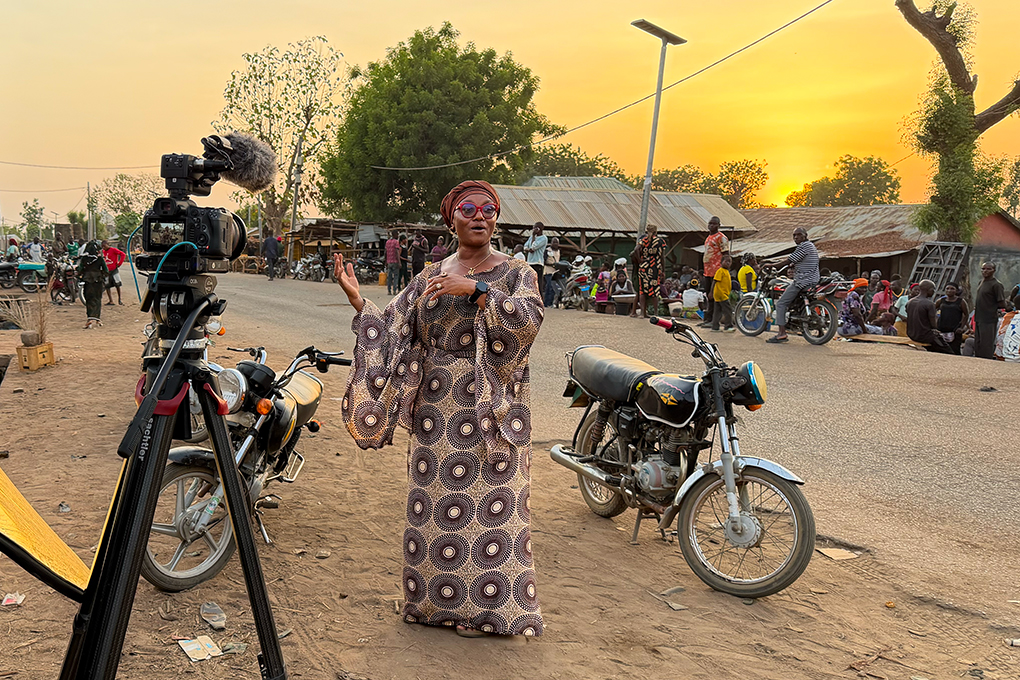
Habiba describes Sosai's impact during a video interview in Mararaban Demshin, Plateau State.
Featured Partners
Sosai Renewable Energies
Sosai Renewable Energies is building a network of decentralized solar minigrids in communities in Nigeria.

Energy Peace Partners
Energy Peace Partners (EPP) provides some of the financing for Sosai through Peace Renewable Energy Credits (P-RECs), a tool that connects renewable energy investment with peace and development outcomes.

Stanley Center
Renewable Peace is an initiative of the Stanley Center that tells the stories of transformative renewable energy and peace projects, such as the work of Sosai Renewable Energies in northern Nigeria.