South Sudan at First Light
South Sudan is the world’s youngest nation, and least electrified. A member of the Lost Boys of Sudan returns to his country to develop electricity and empower a new generation.
South Sudan gained independence in 2011 following decades of civil war. The new country soon experienced renewed internal conflict and political instability, compounding an already enormous human toll marked by widespread loss of life and the displacement of millions of people. The fighting destroyed nascent infrastructure, stifled economic development, and further reduced access to basic services for South Sudanese people.
Climate-related impacts, particularly flooding, have placed additional pressure on many communities whose livelihoods depend on agriculture and pastoralism. The country has been further impacted by the 2023 outbreak of civil war to the north in Sudan, which has led to significant reductions in South Sudanese oil flowing through Sudan’s pipelines. Among other shocks, this has drastically reduced the primary source of government revenue.
South Sudan is the least electrified country in the world, according to World Bank data. Its economy is heavily dependent on oil revenue, and its energy sector is deeply embedded in regional conflict dynamics. Just five percent of the population has access to electricity, with little existing grid infrastructure outside the capital, Juba. Where electricity is available, households, businesses, and public services often rely on expensive imported diesel, exposing the country’s electricity supply to high transport and fuel costs, supply disruptions, armed checkpoints, and fluctuations in global energy prices.
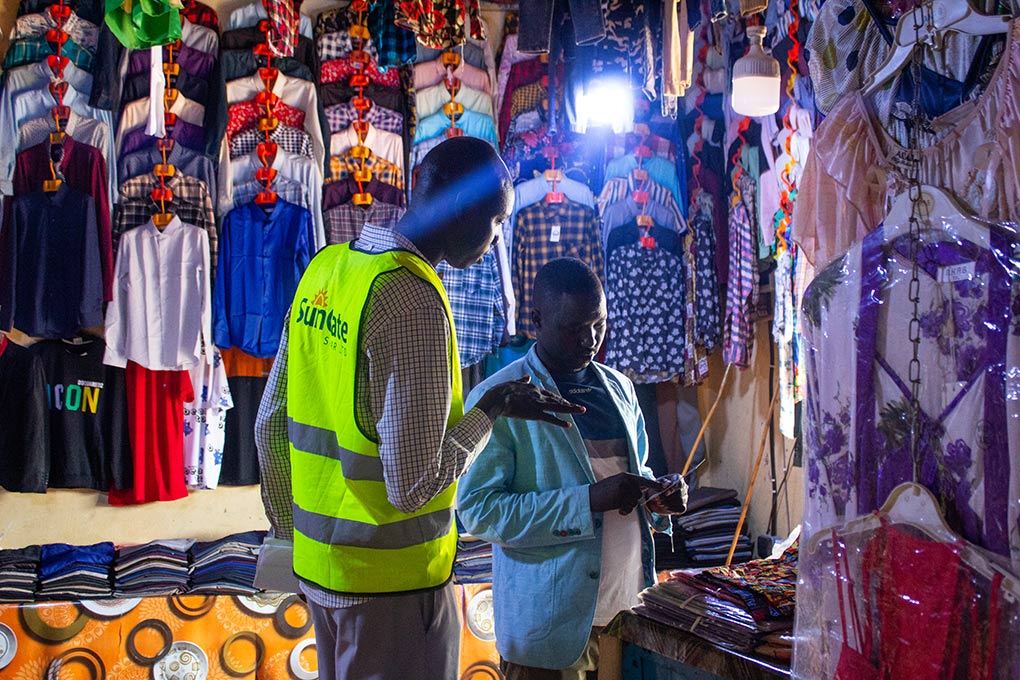
SunGate's ability to provide electricity to local businesses reduces their dependence on costly, conflict-inducing diesel.
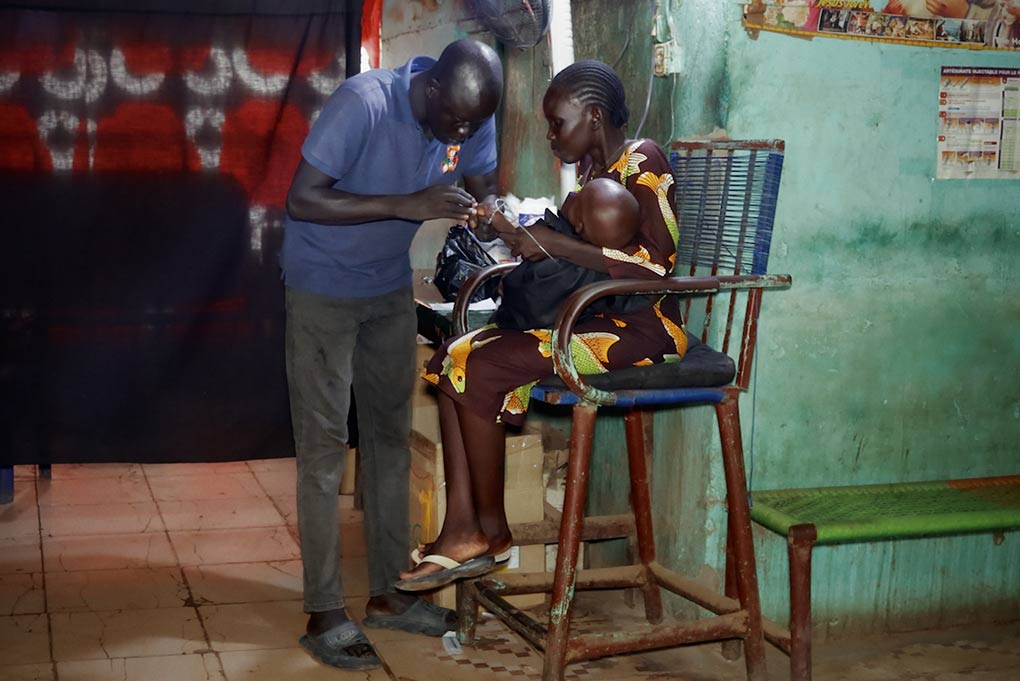
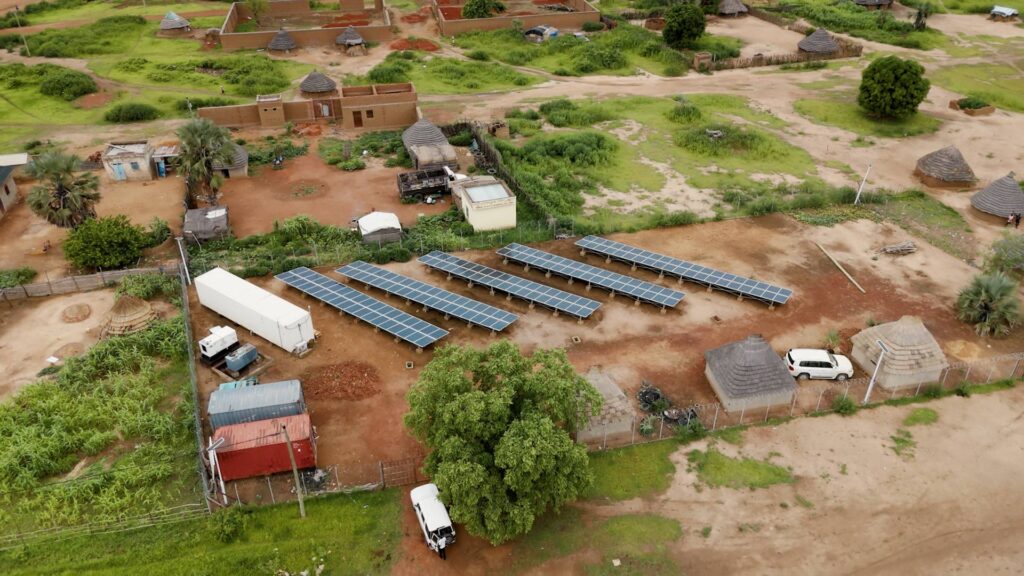
SunGate Solar provides electricity to a health clinic in Wanyjok, Northern Bahr el Ghazal state.
Toward Solutions
It is in this context that SunGate Solar, one of the few South Sudanese solar companies operating in the country, is working to expand access to affordable, reliable renewable energy. In Wanyjok, a market town in Northern Bahr el Ghazal State, SunGate has developed the country’s first solar-powered minigrid, providing electricity to local businesses and services while reducing dependence on costly diesel.
Access to renewable electricity is helping strengthen the local economy, allowing businesses to operate equipment more consistently and stay open later, extending economic activity into the evening. Streetlighting is making commercial areas safer and more accessible after dark, while healthcare providers are better able to deliver essential services without interruption. Together, these self-reinforcing benefits are strengthening livelihoods and the institutions communities depend on, establishing the solar minigrid as an important community asset.
Scaling Up
In a country with little grid infrastructure and enormous solar potential, decentralized renewable energy also offers an opportunity to reduce communities’ dependence on the fuel supply chains that have become intertwined with South Sudan’s war economy. As SunGate expands to more communities, its projects can strengthen local economies while creating some of the conditions that underpin greater resilience, stability, and peace.
Featured Partners
SunGate Solar
SunGate Solar is working to expand access to affordable, reliable renewable energy with a vision to empower the people and country of South Sudan and to lay the foundation for a prosperous future.

Energy Peace Partners
Energy Peace Partners (EPP) provides some of the financing for developers through tools that connect renewable energy investment with peace and development outcomes.

Stanley Center
Renewable Peace is an initiative of the Stanley Center that tells the stories of transformative renewable energy and peace projects, such as the work of SunGate Solar in South Sudan.